


Free TeachMeet on September 23: Navigating the Election

This curated list of books was chosen by IFSEL’s team because they offer interesting perspectives on timely topics in education and are all related to SEL. We hope these reads spark interesting discussions in your community and would love to hear your thoughts and impressions. We also want to know if there are any that you would add to our list!
Looking for student summer reads? Check out these suggestions book suggestions for students.
Follow us on social media for our latest SEL Resources:

Discover the secret to flourishing in an age of division: belonging. In a world filled with discord and loneliness, finding harmony and happiness can be difficult. But what if the key to unlocking our potential lies in this deceptively simple concept? Belonging is the feeling of being a part of a group that values, respects, and cares for us―a feeling that we can all cultivate in even the smallest corners of social life.
Learn More
Calling In is part memoir, part manifesto, and part guidebook. Ross, a Black feminist activist who has spent five decades deprogramming white supremacists and teaching convicted rapists about feminism, shares powerful stories and practical tools. She shows how calling people in—focusing on shared values over punishment—can create real change, whether in workplaces, classrooms, or everyday life.
Learn More
Social emotional learning (SEL) is frequently taught in schools, but how can educators embrace it in their own lives? In this helpful guidebook, Wendy Turner demonstrates the importance of SEL being embraced, understood, and modeled by all members of the learning community. First, she offers tools to increase your self-awareness, including mindset, identity and culture, strengths, and core values. Second, she shows what self-management is and why it matters in helping everyone manage complex emotions in myriad ways. Then she explains what empathy is, and is not, and how it pertains to social issues, identity, and culture.
Learn More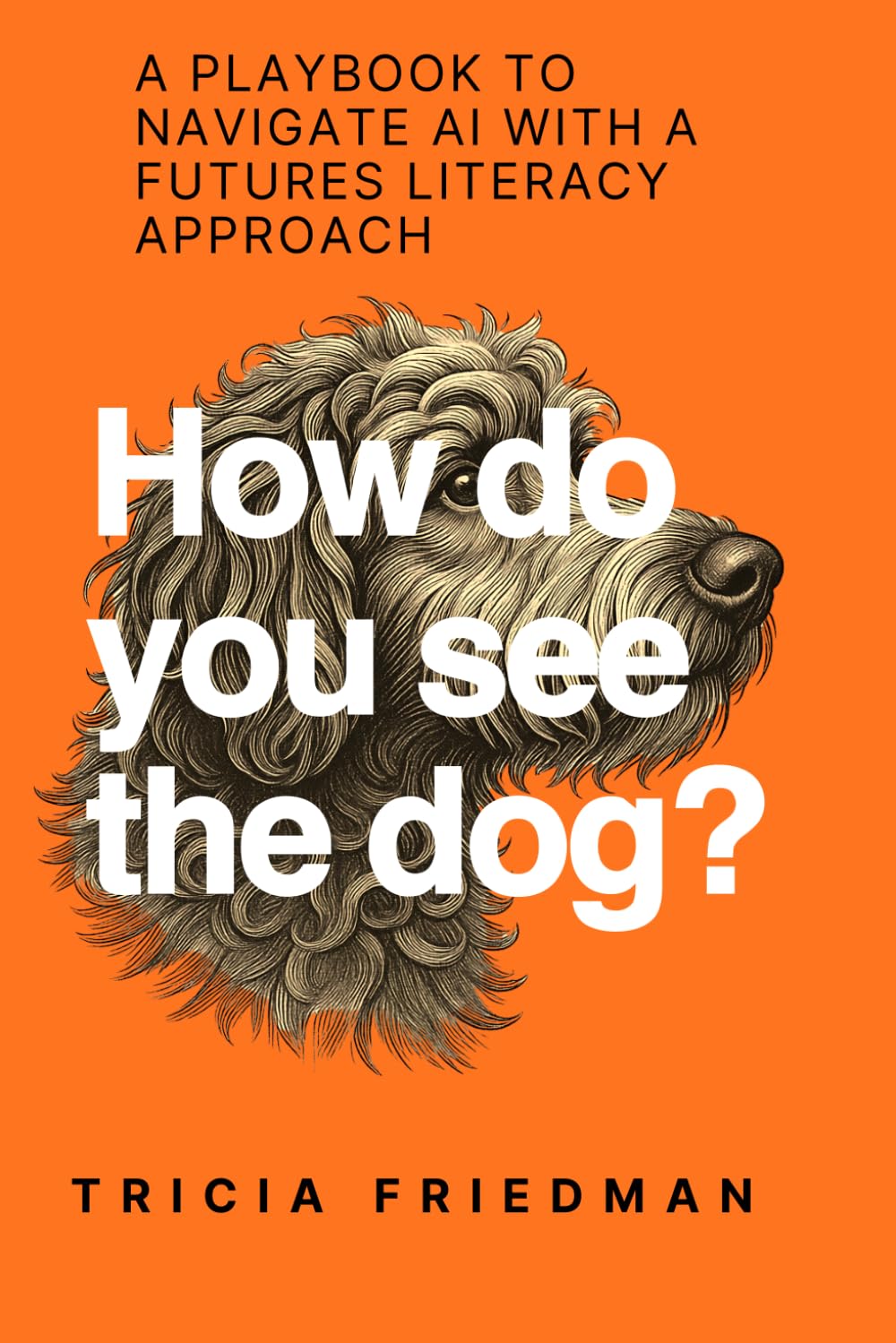
AI is not just a technology question. It is a thinking question. School leaders are being asked to make high-stakes decisions about AI in real time—often without the strategy frameworks or shared understanding to do it well. How Do You See the Dog? offers a different starting point. Instead of handing you a checklist of tools or a one-size-fits-all policy response, Tricia Friedman invites K-12 school leaders into a futures literacy approach: one that helps you notice assumptions, read signals, ask better questions, and lead with greater clarity in uncertain times. At the center of the book is a simple image: five people see the same dog in the park, and each interprets it differently. That gap between what is there and what we think we see becomes a powerful way to understand why conversations about AI in schools so often become polarized, reactive, or stuck.
Learn More
In a world where addictive technology is designed to buy and sell our attention, and our value is determined by our 24/7 data productivity, it can seem impossible to escape. But in this inspiring field guide to dropping out of the attention economy, artist and critic Jenny Odell shows us how we can still win back our lives.
Learn More
A practical, accessible and research-based book for educators who are wrestling with teaching and learning in the face of rapidly-changing technologies. Packed with research and strategies and based on over four years of work on AI in education and 20 years of experience and study, this book will give you a solid foundation in adapting to a changing educational ecosystem. (If You) USEME-AI is based on a model created by Stephen in 2022, containing up-to-date research and approaches, across eight main chapters and a few SideQuests
Learn More
For those educators who are uncomfortable with the punitive world of zero tolerance, isolation booths and school exclusions, Mark Finnis – one of the UK’s leading restorative practice experts – is here to show you that there is another way. Drawing on his many years’ experience working with schools, social services and local governments across the country, Mark shares all you need to know about what restorative practice is, how it works, where to start and the many benefits of embedding a relational approach into any educational organisation that genuinely has people at its heart.
Learn More
Boys and men are struggling. Profound economic and social changes of recent decades have many losing ground in the classroom, the workplace, and in the family. While the lives of women have changed, the lives of many men have remained the same or even worsened. In this widely praised book, Richard Reeves, father of three sons, a journalist, and now the president of the American Institute for Boys and Men, tackles the complex and urgent crisis of boyhood and manhood. He argues that our attitudes, our institutions, and our laws have failed to keep up. Conservative and progressive politicians, mired in their own ideological warfare, fail to provide thoughtful solutions.
Learn More
Off Leash is a 10-day challenge for anyone who wants to get better at noticing change before it hardens into “just the way things are.” Through field missions, sketches, awkward questions, and sharp reflection, you will train your eye to catch the signals hiding in everyday life. Along the way, you’ll use BARK, a four-part framework for reading the world through behaviours, artifacts, rhetoric, and knowledge. First, you learn to notice. Then you aim that attention at a problem that actually matters to you.
Learn More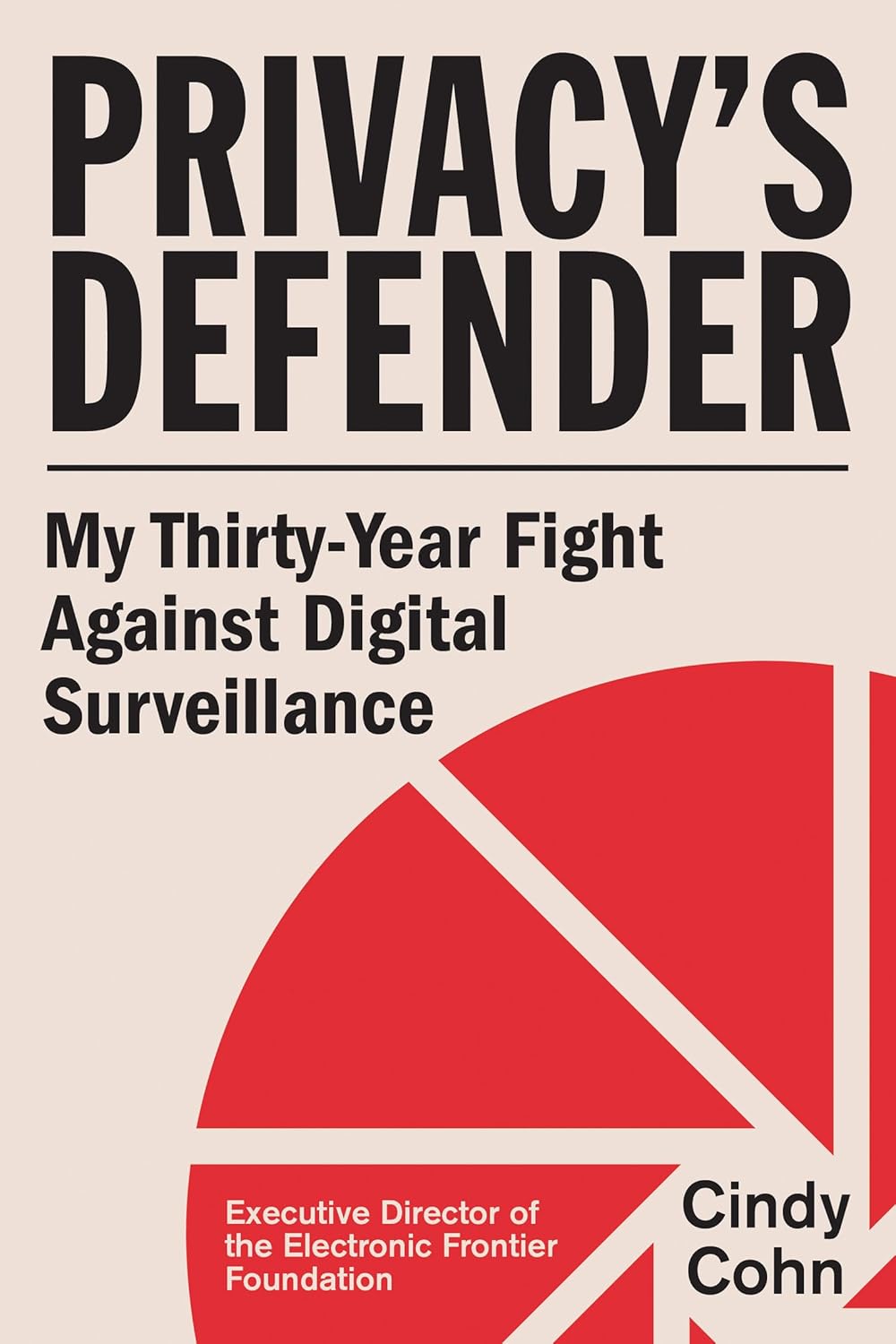
Throughout her career, Cindy Cohn has been driven by a fundamental question: Can we still have private conversations if we live our lives online? Privacy’s Defender chronicles her thirty-year battle to protect our right to digital privacy and shows just how central this right is to all our other rights, including our ability to organize and make change in the world. Shattering the hypermasculine myth that our digital reality was solely the work of a handful of charismatic tech founders, the author weaves her own personal story with the history of Crypto Wars, FBI gag orders, and the post-9/11 surveillance state. She describes how she became a seasoned leader in the early digital rights movement, as well as how this work serendipitously helped her discover her birth parents and find her life partner. Along the way, she also details the development of the Electronic Frontier Foundation, which she grew from a ragtag group of lawyers and hackers into one of the most powerful digital rights organizations in the world.
Learn More
In Chapter 6 of this new book, "Building and Sustaining a Whole-Community Approach to Equity-Rooted SEL", IFSEL Executive Director and Co-Founder Nick Haisman-Smith outlines a bold, evidence-informed vision for embedding Social and Emotional Learning (SEL) across entire school communities. It offers practical strategies for schools and districts seeking lasting, transformative change. To read the chapter, please email connect@instituteforsel.net
Learn More
“A winning combination of stories, studies, and guidance that might well transform the worst communicators you know into some of the best.”—Adam Grant, author of Think Again and Hidden Potential
Learn More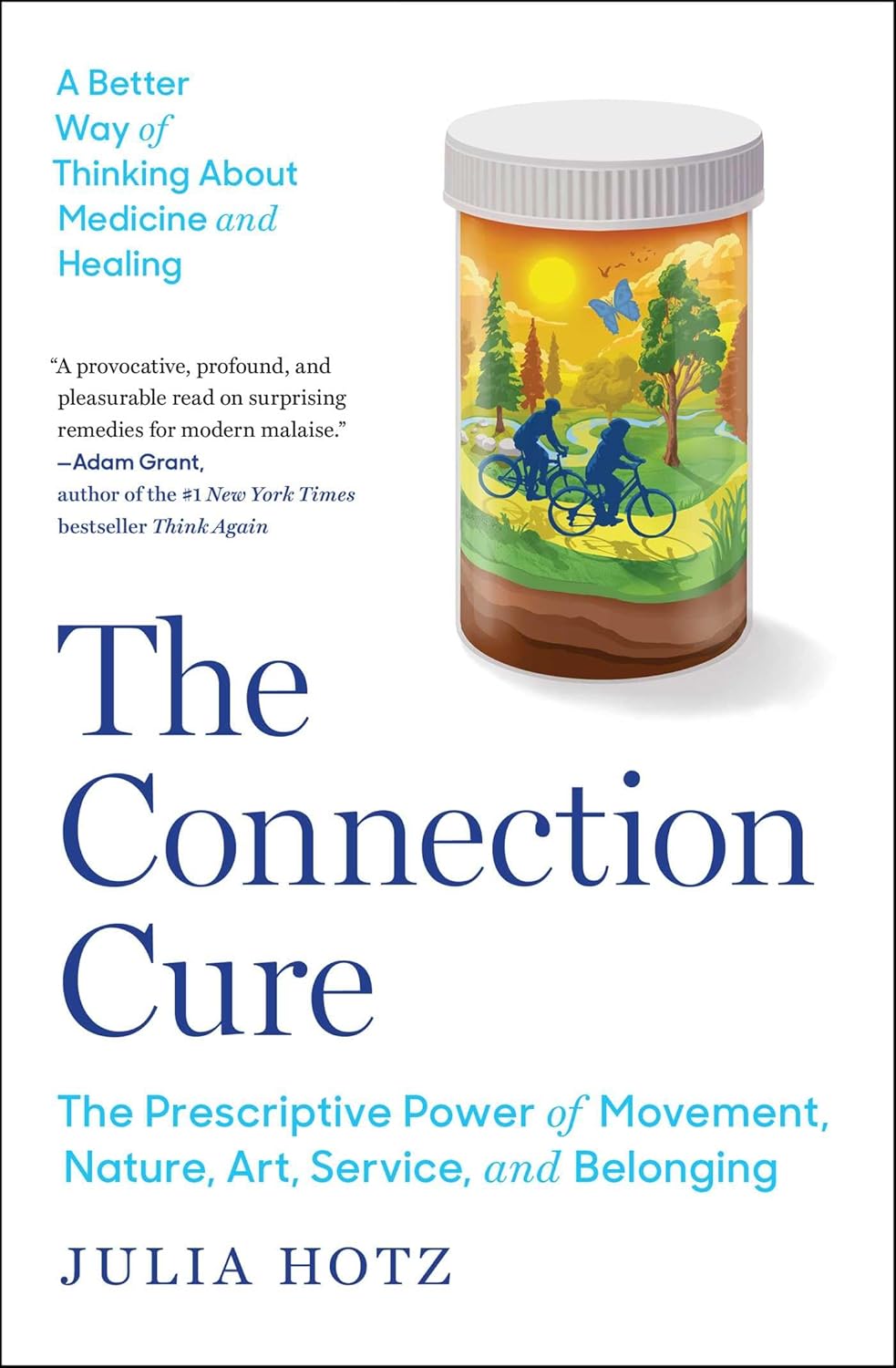
Traditionally, when we get sick, health care professionals ask, “What’s the matter with you?” But around the world, teams of doctors, nurses, therapists, and social workers have started to flip the script, asking “What matters to you?” Instead of solely pharmaceutical prescriptions, they offer “social prescriptions”—referrals to community activities and resources, like photography classes, gardening groups, and volunteering gigs
Learn More
The Good Life reveals a simple truth: strong relationships are the key to a happy, healthy, and meaningful life. Based on the Harvard Study of Adult Development—the longest-running study of its kind—the book shares powerful stories and research showing how our connections shape our well-being. From friendships to family to coworkers, it’s never too late to deepen or build new bonds. Praised by top thinkers and rooted in science, The Good Life offers timeless guidance on what truly matters.
Learn More
In 1960, a young woman discovers a freedom she never knew existed in this exhilarating, funny, and emotional novel by the bestselling author of She’s Up to No Good.
Learn More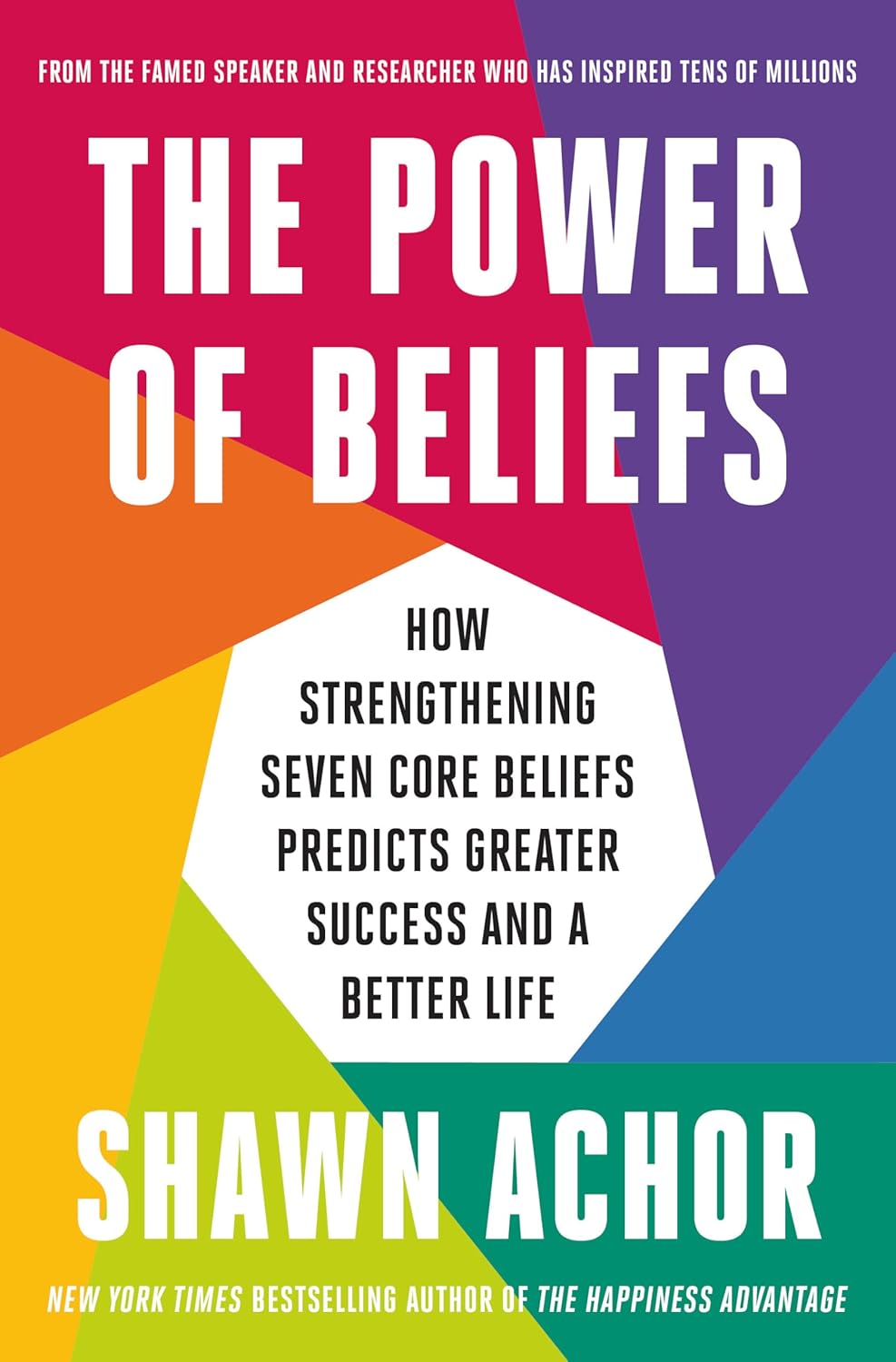
The greatest predictor of your future is the beliefs you hold about the world. In this extraordinary book, world-renowned researcher and author Shawn Achor illuminates how beliefs change the math about what is possible and probable in our lives. And by changing the math, beliefs change our path. Drawing on two decades of research, as well as his work with NASA, the NFL, and over a third of the Fortune 100 companies, Shawn has discovered that the predictive power of beliefs has increased significantly. Beliefs about ourselves, money, the world, politics, faith, and work do more than shape the lens through which we see the world. They shape what happens next. Scientifically speaking, beliefs don’t just reflect reality. Beliefs bend reality.
Learn More
The Snail with the Right Heart is a story about time and chance, genetics and gender, love and death, evolution and infinity—concepts often too abstract for the human mind to fathom, often more accessible to the young imagination; concepts made fathomable in the concrete, finite life of one tiny, unusual creature dwelling in a pile of compost amid an English garden. Emerging from this singular life is a lyrical universal invitation not to mistake difference for defect and to welcome, across the accordion scales of time and space, diversity as the wellspring of the universe’s beauty and resilience.
Learn More
In the face of unprecedented levels of loneliness, burnout, and insecurity, and referencing the insight of experts and brand new research, Why Am I Like This? shows that by harnessing the power of curiosity and compassion, we can start to feel more hopeful, connected, and at peace with ourselves and each other. From how we communicate, to our ambitions and self-image, Gemma paints a picture of mental health in the digital age, including her own journey and ADHD diagnosis to highlight the ways in which women’s mental health in particular is often overlooked or trivialized.
Learn More
A staple experience at IFSEL is check-in and naming emotions. This book offers interesting insights to this common SEL experience. While we may think of emotions as universal responses, felt inside, psychologist Batja Mesquita asks us to reconsider them through the lens of what they do in our relationships, both one-on-one and within larger social networks. “Between Us offers an “outside-in” perspective to emotions in different cultures. Mesquita explains why various emotions mean different things in different places; pride in North Carolina is not the same thing as it is in Amsterdam. By looking outward at relationships at work, school, and home, we can better judge how our emotions will be understood, how they might change a situation, and how they change us. “Understanding people across cultural and racial divides requires immersing yourself in their diverse emotional realities. The book is a must-read for everyone working towards justice and inclusion -- from law enforcement to schools to the workplace." ― Jennifer Eberhardt, Stanford University
Learn More
In this book, Zaretta Hammond draws on cutting edge neuroscience research to offer an innovative approach for designing and implementing brain compatible culturally responsive instruction.
Learn More
Underlying IFSEL’s whole community approach to SEL is the goal of creating schools where all children and adults feel a sense of belonging. David Brooks observes, “There is one skill that lies at the heart of any healthy person, family, school, community organization, or society: the ability to see someone else deeply and make them feel seen—to accurately know another person, to let them feel valued, heard, and understood.” In this book, Brooks sets out to outline how we can do better at this and poses questions that are essential for all of us: If you want to know a person, what kind of attention should you cast on them? What kind of conversations should you have? What parts of a person’s story should you pay attention to? Brooks points out that the act of knowing another person is profoundly creative.
Learn More
This small book is full of love and practical ideas for teachers to explore our shared humanity. We think it is kind of like an IFSEL workshop in a book. There are opportunities to reflect and engage with the simple and profound ideas at the end of each chapter, and readers are invited to explore how we have been socialized to accept the status quo and how we can rely on love to engage in teaching for social justice, even in the presence of fear. Shamari Reid lays out a path for working toward liberation for our students and ourselves by honoring our own humanity and choosing love over fear.
Learn More
"If you want to understand how we can best thrive in a world that is rapidly changing because of AI, and feel hopeful and confident about the role you can play, you'll find this book to be both brilliant and essential. Full of insights and practical tips, I, Human will prepare you for the future by focusing your attention on the very traits that make human nature unique." — Francesca Gino, Harvard Business School "A must-read for anyone who has wondered how we can maintain our humanity amid the super powerful prediction machines we've created." — Angela Duckworth
Learn More
Despite our deep desire to feel a sense of belonging, many of us feel isolated. The rise of technology and modern workplace practices have led people to be even more disconnected, even as we remain constantly contactable. And as our human interactions have decreased, so too have our happiness levels. This is sparking a crisis in mental health that will have repercussions for years, leaving people lonelier and organizations less productive and profitable, too. What Christine Porath has discovered in her research is that leaders, organizations, and managers of all stripes may recognize there is a cost but have few solutions for how to implement the cure
Learn More
This new edition offers new insights into Carol Dwek’s now broadly embraced concept of the power of mindset. She introduces a phenomenon she calls false growth mindset and guides people toward adopting a deeper, truer growth mindset. She also expands the mindset concept beyond the individual, applying it to the cultures of groups and organizations. With the right mindset, you can motivate those you lead, teach, and love—to transform their lives and your own.
Learn More
There are many books on “hustle culture” and this one is written for parents and schools. “Thoughtfully, expertly and, without judgment, Wallace guides readers through the stressful terrain of our achievement culture and offers a more emotionally intelligent route forward.” –Robin Stern, Ph.D, Co-founder and Associate Director for the Yale Center for Emotional Intelligence
Learn More
More than a summer read, Elena Aguilar’s practical framework for educators to build resilience, self awareness and community is a classic that we recommend!
Learn More
Most people we know have noticed that its gotten harder to pay attention. We see it in ourselves and we see it in our students. Jonathan Hari set out to understand this phenomenon and the result is a fascinating story. Hari claims that there are twelve deep causes of this crisis, from the decline of mind-wandering to rising pollution, all of which have robbed some of our attention. He offers ideas for solutions.
Learn More
Another important book which contains a collection of essays on the intersections between education and politics, race, class, and gender. bell hooks, inspired by Paulo Freire, rethinks the role of the student and teacher through the vulnerable work of self-reflection and scrutiny.
Learn More
Everyone is talking about this book by social psychologist Jonathan Haidt. Haidt lays out the facts about the epidemic of teen mental illness and investigates the nature of childhood, including why children need play and independent exploration to mature into competent, thriving adults. Haidt shows how “play-based childhood” has evolved to “phone-based childhood” and offers four simple rules for parents, teachers, schools, tech companies, and governments to restore a more humane childhood. No matter what your “position” is about the role of devices and technology in schools, homes, and childhood, this book is sure to spark a lively discussion.
Learn More
This is a highly practical book that provides scaffolding and stories to support educators in foundational SEL skills and mindsets including: self awareness and understanding of five identity categories: race, social class, gender, sexual orientation, and disability. Questions at the end of each chapter and the process of reading this book with others in your school community offer a powerful opportunity to support positive engagement with diverse perspectives and skills for healthy engagement with conflict transformation, all in service of creating more caring and inclusive communities.
Learn More
In this follow-up to Cultivating Genius, Dr. Gholdy Muhammad adds a fifth pursuit―joy―to her groundbreaking instructional model. She defines joy as more than celebration and happiness, but also as wellness, beauty, healing, and justice for oneself and across humanity. She shows how teaching from cultural and historical realities can enhance our efforts to cultivate identity, skills, intellect, criticality, and-indeed-joy for all students, giving them a powerful purpose to learn and contribute to the world. Dr. Muhammad's wise implementation advice is paired with model lessons and assessment tools that span subjects and grade levels.
Learn More.png)
Join IFSEL’s Summer Institutes for an energising, hands-on professional learning experience built around high-impact SEL practices that work in real classrooms. Through immersive workshops, collaboration, and reflection, you’ll leave with a powerful set of tools and resources to strengthen belonging, engagement, and wellbeing across your school community.
More InfoJoin IFSEL’s Summer Institutes for an energising, hands-on professional learning experience built around high-impact SEL practices that work in real classrooms. Through immersive workshops, collaboration, and reflection, you’ll leave with a powerful set of tools and resources to strengthen belonging, engagement, and wellbeing across your school community.
More Info%20(1080%20x%201080%20px).png)
This experiential two-day workshop is designed to upskill your practice and amplify your impact. Together, we’ll unpack the role of the advisor, tackle common challenges, and build a toolkit that promotes student belonging, connection, and success.
More Info.png)
This program supports leaders and educators around the world to build and sustain an inclusive, equitable, SEL-rooted school community. This online program is experiential, inspiring, and renewing - providing a balance of high impact practical tools and approaches, alongside space for collaboration and reflection.
More Info


